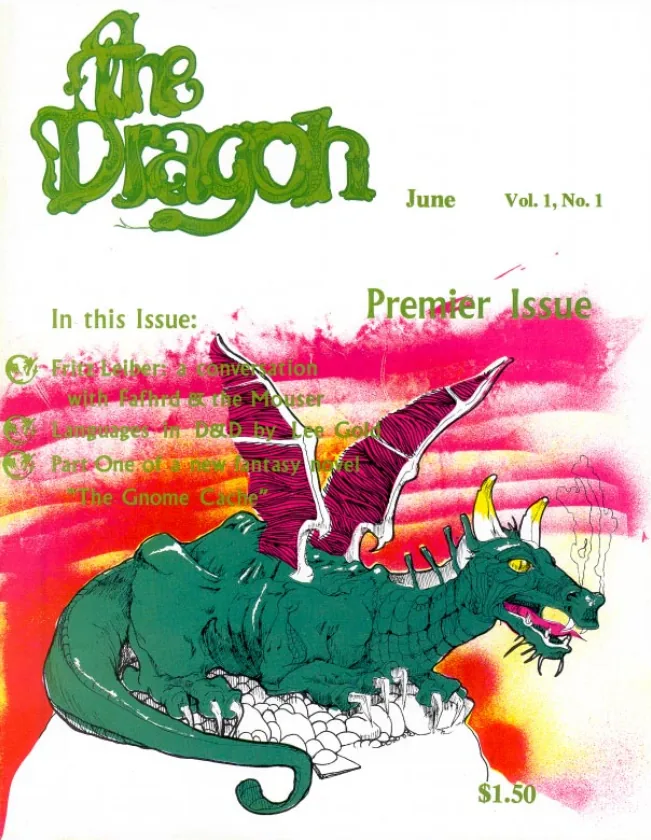
There is something magical about holding Dragon Magazine #1.
The paper is thinner than modern magazines, the cover is simple, and the price printed in the corner—$1.50—is enough to make any old-school gamer smile. Long before glossy layouts, full-color spreads, and previews of the latest releases, there was a small magazine created by a handful of enthusiasts who simply wanted to share ideas with other gamers.
Published in June 1976, The Dragon was the successor to The Strategic Review, but it was never intended to be merely a house newsletter for TSR. Under the guidance of editor Tim Kask, the magazine welcomed articles about Dungeons & Dragons, miniature wargaming, fantasy literature, and games from competing publishers. The goal was simple: if the hobby grew, everyone benefited.
Turning these pages today is like opening a time capsule. Famous names appear beside unknown contributors, future legends publish their earliest work, and ideas that would shape role-playing for decades sit casually alongside house rules and letters from ordinary gamers. This is not just the first issue of a magazine—it is a snapshot of a hobby that was still inventing itself.
So let’s open the cover and see what gamers found on the newsstands in the summer of 1976.
Inside This Issue
The first thing that becomes apparent when reading Dragon Magazine #1 is that it doesn’t feel like a modern gaming magazine. There are no previews of upcoming products, no glossy advertisements, and no endless pages of reviews. Instead, every page is devoted to sharing ideas from gamers, designers, authors, and hobbyists who were helping define a brand-new pastime.
Tim Kask’s editorial vision is evident from the very beginning. Although published by TSR, Dragon was never intended to be simply a company newsletter. The first issue includes articles on Dungeons & Dragons, Chainmail, Dungeon!, White Bear and Red Moon, Citadel, and other games, reflecting a philosophy that a healthy gaming community benefited everyone.
Several articles immediately stand out:
Fafhrd & The Mouser Have Their Say
Fantasy author Fritz Leiber contributes an article discussing the famous heroes who inspired countless adventurers. Having one of Gary Gygax’s Appendix N authors appear in the very first issue demonstrates the magazine’s ambition and its close connection to fantasy literature.
Hints for D&D Judges
Joe Fischer continues his referee advice series with practical suggestions for wilderness adventures. Decades later, much of the advice remains recognizable to anyone running an old-school campaign: challenge the players, reward exploration, and let the world feel larger than the dungeon.
Magic and Science
James M. Ward explores the relationship between fantasy and scientific thinking, reminding readers that even in 1976 players enjoyed debating the internal logic of magical worlds.
The Gnome Cache
Perhaps the most intriguing inclusion is the opening chapter of The Gnome Cache, a serialized story by Gary Gygax writing under the pseudonym Garrison Ernst. While only loosely inspired by his Greyhawk campaign, it offers readers a rare glimpse into the imagination of the game’s co-creator at a time when the World of Greyhawk had yet to be formally published.
Rather than presenting polished, definitive answers, every article feels like a conversation among gamers eager to share ideas. That collaborative spirit is what makes Dragon Magazine #1 so enjoyable to read nearly fifty years after it first appeared on hobby shop shelves.
First Impressions
The first thing that strikes you about Dragon Magazine #1 is its simplicity.
Modern gaming magazines compete for attention with glossy covers, dramatic artwork, and bold headlines. Dragon #1 does none of those things. Bill Hannan’s black-and-white dragon illustration sits against a plain background with little fanfare, quietly announcing the arrival of a new publication rather than demanding attention from a crowded newsstand.
The magazine itself is digest-sized and feels more like a club journal than a commercial periodical. Dense columns of text dominate nearly every page, broken only by occasional line drawings and hand-illustrated headings. There are no lavish layouts, no full-page advertisements, and very little wasted space. Every inch seems dedicated to sharing ideas with fellow gamers.
Even the cover price—$1.50—serves as a reminder of how young the hobby was in 1976. TSR was still a small company, and Dragon was an ambitious experiment rather than an established institution. The print run was only a few thousand copies, produced for a community that could comfortably fit inside a convention hall.
Flipping through the pages today, the magazine feels less like a polished publication and more like an invitation to join a conversation. Referees, players, miniature enthusiasts, and fantasy fans all contribute their own ideas with an enthusiasm that is unmistakably genuine. That sense of discovery gives the first issue a charm that no amount of modern production value can reproduce.
Turning the Pages
Open the cover and the first thing you encounter is not a new monster or a set of optional rules, but Fritz Leiber. It is a remarkable choice for a debut issue. Rather than leading with TSR products, editor Tim Kask opens the magazine with an essay from one of the fantasy authors whose work inspired Dungeons & Dragons itself. The message is clear: Dragon intends to celebrate fantasy gaming as a whole, not simply promote a single game.
As the pages turn, that philosophy becomes even more apparent. Articles on Dungeons & Dragons sit comfortably beside discussions of Chainmail, Dungeon!, fantasy miniatures, and other games. There is no sense that the reader is expected to play only one system. Instead, the magazine assumes that gamers are curious people who enjoy exploring every corner of the hobby.
The writing is equally refreshing. Most contributors are not professional journalists or game designers but enthusiastic players sharing ideas from their own tables. House rules, optional mechanics, and referee advice are presented with confidence but without claiming to be the “correct” way to play. The magazine feels like a conversation among friends who have gathered to exchange their latest discoveries.
Between the articles are simple line drawings, modest advertisements, and the occasional piece of fiction, all contributing to the feeling that this is a publication created by gamers for gamers. It lacks the polished appearance of later issues, yet that roughness is part of its appeal. You are witnessing a hobby that is still defining itself.
Perhaps the greatest surprise is how familiar many of the discussions feel. Referees debate world building, players experiment with new character ideas, and writers speculate about the role of magic and realism in fantasy gaming. Nearly fifty years later, the questions have changed very little.
By the time you reach the back cover, it is easy to understand why Dragon would become the voice of the hobby. The first issue is not perfect, but it is filled with energy, imagination, and an unmistakable invitation to participate rather than simply consume.
A Window into 1976
Reading Dragon Magazine #1 is a reminder that the hobby was still in its infancy. Dungeons & Dragons had been published only two years earlier, and there were no established conventions for how role-playing games should be played, discussed, or even written about.
That uncertainty is visible on every page.
Authors freely present house rules, optional systems, and personal opinions without concern for official authority. Referees are encouraged to experiment, borrow ideas from literature, and modify the game to suit their own campaigns. The assumption is that every gaming table is different, and that sharing successful ideas benefits the entire community.
Perhaps most surprising to a modern reader is the magazine’s openness. Although published by TSR, Dragon is not a company catalog. Articles discuss competing games, miniature rules, fantasy fiction, and historical gaming alongside Dungeons & Dragons. Tim Kask’s editorial philosophy is evident throughout: a stronger hobby benefits everyone, regardless of what appears on the cover of the rulebook.
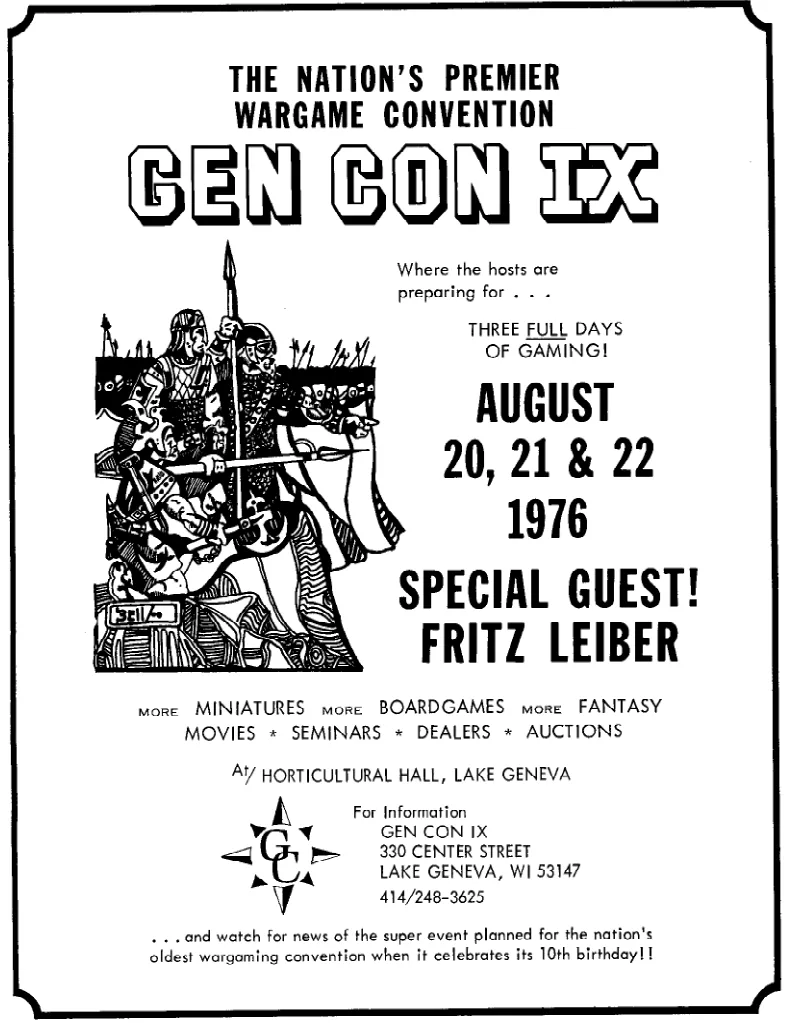
The contributors reflect that same community spirit. Some names, such as Gary Gygax, James M. Ward, and Len Lakofka, would become legendary. Others were simply enthusiastic gamers with an idea worth sharing. In 1976, the distinction between designer and fan was often nonexistent.
Looking back nearly fifty years later, the magazine captures something that later publications inevitably lost—a sense that anything was possible. There were no decades of established lore, no official campaign settings dominating the conversation, and no expectation that every rule needed to be balanced or universally accepted. The hobby was still being invented one gaming session at a time.
That spirit of experimentation is the true legacy of Dragon Magazine #1, and it remains just as inspiring today as it was in the summer of 1976.
Greyhawk Connection
At first glance, Dragon Magazine #1 appears to have very little to do with the World of Greyhawk. There are no maps of the Flanaess, no descriptions of the Free City, and no articles detailing the heroes and villains that would later become synonymous with the setting.
Look a little deeper, however, and Greyhawk is everywhere.
The magazine was edited by Tim Kask while Gary Gygax served as president of TSR, and much of the creative energy behind the publication flowed directly from the gaming tables in Lake Geneva. Contributors such as James M. Ward and Len Lakofka would become familiar names to generations of Greyhawk players, while the opening installment of The Gnome Cache, written by Gygax under the pseudonym Garrison Ernst, offers readers a story loosely inspired by his home campaign.
More importantly, Dragon captures the culture that created Greyhawk. Referees freely shared house rules, players debated new ideas, and every issue encouraged experimentation rather than official answers. That collaborative spirit is exactly how the original Castle Greyhawk campaign grew from a local game into the foundation of an entire hobby.
In many ways, Dragon Magazine #1 is not a Greyhawk sourcebook but a snapshot of the community that made Greyhawk possible. Reading it feels like sitting at a nearby table in the Dungeon Hobby Shop, listening as Gary Gygax, Tim Kask, and a room full of enthusiastic gamers exchange ideas that would shape role-playing for decades to come.
Greyhawk Relevance
★★★★☆ (4 out of 5 Castles)
While it contains very little direct Greyhawk setting material, Dragon Magazine #1 is deeply rooted in the people, creativity, and collaborative spirit that gave birth to the World of Greyhawk. It is essential reading for anyone interested in the history of the setting and the hobby that grew around it.
Comments