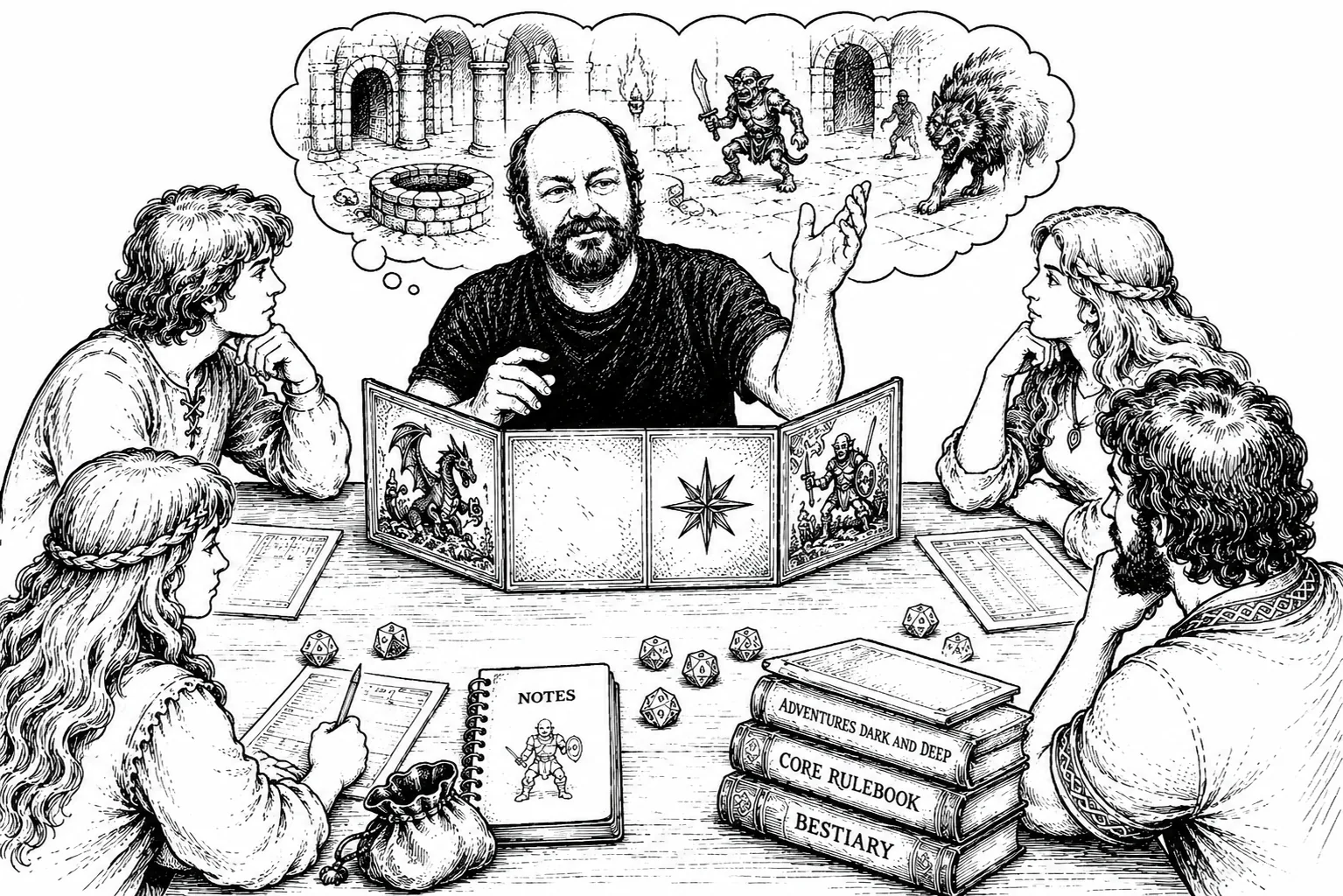
“The best tool in a Dungeon Master’s toolbox has never been a miniature, a battle map, or a piece of terrain. It has always been the imagination shared by everyone gathered around the table.”
Walk into three different gaming rooms and you may wonder if the same game is being played.
At one table, a Dungeon Master sits behind a well-worn screen with nothing more than a notebook, a handful of dice, and a copy of the Adventures Dark & Deep™ Core Rulebook. The players lean forward as forgotten ruins, mysterious forests, and ancient dragons come to life entirely through spoken descriptions and imagination.
Across town, another group gathers around a battle map covered with miniatures and dungeon tiles. Every corridor, doorway, and secret passage is represented visually, allowing the players to carefully plan each movement through dangerous territory.
Elsewhere, an entire section of Greyhawk has been recreated in three dimensions. Painted miniatures explore handcrafted terrain while ambient music fills the room and flickering lanterns illuminate the dungeon below.
Each group is playing the same game. Each group is creating unforgettable adventures. The difference is simply the tools they choose to bring to the table.
Theatre of the Mind
For decades, this was how most fantasy role-playing games were experienced.
The Dungeon Master describes the scene, the players imagine it, and the adventure unfolds entirely within a shared mental picture. There are no battle maps to prepare, no miniatures to paint, and no terrain to assemble. The only things required are a few dice, character sheets, and a willingness to listen and imagine.
Theatre of the Mind excels at creating atmosphere. A ruined temple can feel impossibly vast because every player imagines it differently. A chase through the streets of Greyhawk City moves quickly because the referee isn’t stopping to draw every alley and marketplace. Conversations with suspicious innkeepers and tense negotiations with rival adventurers become the focus instead of precise movement and line of sight.
Many experienced referees also appreciate the freedom this style provides. If the party unexpectedly decides to explore a forgotten lighthouse instead of the abandoned mine you prepared, the adventure can change direction immediately without rearranging maps or searching for the correct terrain pieces.
Theatre of the Mind — At a Glance
What You Need
- Core Rulebook
- Core Bestiary
- Set of Dice
- Character sheets
- Pencil
- Notebook
The referee describes the world. The players describe their actions. The dungeon, the monsters, and the battle all exist in the shared imagination of everyone around the table.
Advantages
- Fast play
- Almost no setup
- Inexpensive
- Encourages creativity
- Easy to improvise
- Easy to travel with
Best For
- New groups
- Roleplaying scenes
- Wilderness travel
- Exploration
- Small combats
OERIK Tip: When using Theatre of the Mind, describe landmarks instead of distances.
The greatest strength of Theatre of the Mind is its simplicity. Everything needed to play fits inside a small backpack, making it an ideal choice for new referees, convention games, travel, or groups that prefer storytelling over tactical precision.
Only when battles become especially large or terrain becomes unusually complex does it begin to show its limitations. At those moments, many groups naturally reach for a map.
Battle Maps and Miniatures
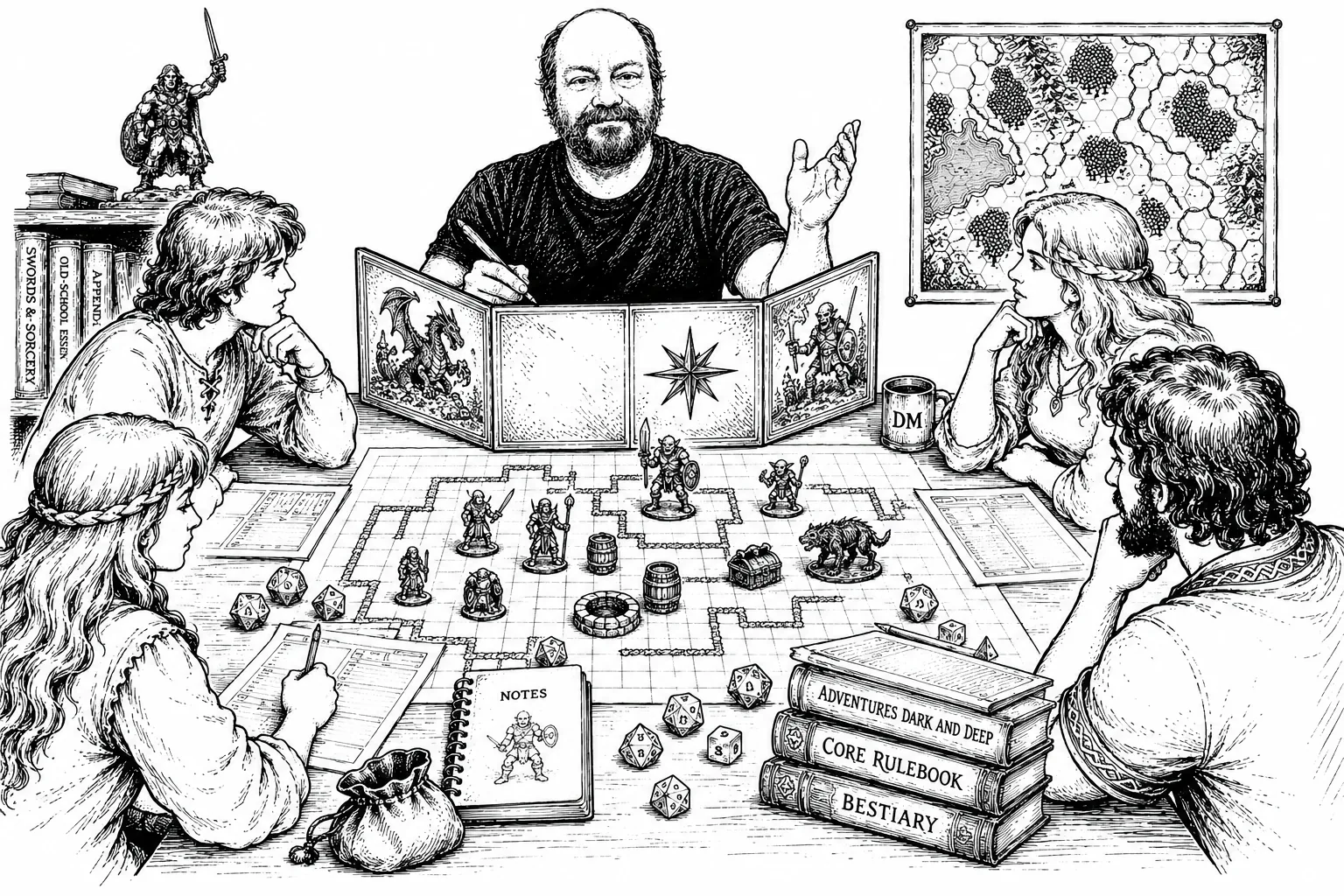
Somewhere between pure imagination and a table covered in handcrafted terrain lies the style adopted by countless gaming groups: battle maps and miniatures.
The Dungeon Master still describes the world through narration, but when swords are drawn or a dungeon becomes confusing, a map appears on the table. Miniatures, standees, or simple tokens help everyone understand where the action is taking place without replacing the imagination that drives the game.
For many referees, this approach offers the best of both worlds. Exploration, roleplaying, and travel remain fast and flexible, while important combats gain the clarity that visual references provide. Players can immediately see the narrow bridge spanning an underground chasm, the fallen columns providing cover, or the goblins waiting behind a barricade.
Battle maps do not have to be elaborate. Some groups use graph paper and pencils, others rely on dry-erase mats or printed dungeon tiles, and many create wonderful encounters with nothing more than cardboard standees and a few coins borrowed from a pocket.
The purpose is not to impress the players with expensive accessories. It is to help everyone share the same picture of the battlefield while keeping the adventure moving.
Battle Maps & Miniatures — At a Glance
What You Need
- Dry erase battle mat
- Paper maps
- Standees or miniatures
- Tokens
- Wet erase markers
- Dice
Advantages
- Clear positioning
- Easier tactical combat
- Better for large encounters
- Everyone sees the same battlefield
Best For
- Dungeons
- Large combats
- Complex terrain
- Conventions
- New players
OERIK Tip: A simple hand-drawn map and cardboard standees can create just as memorable an encounter as expensive terrain.
The Fully Immersive Table
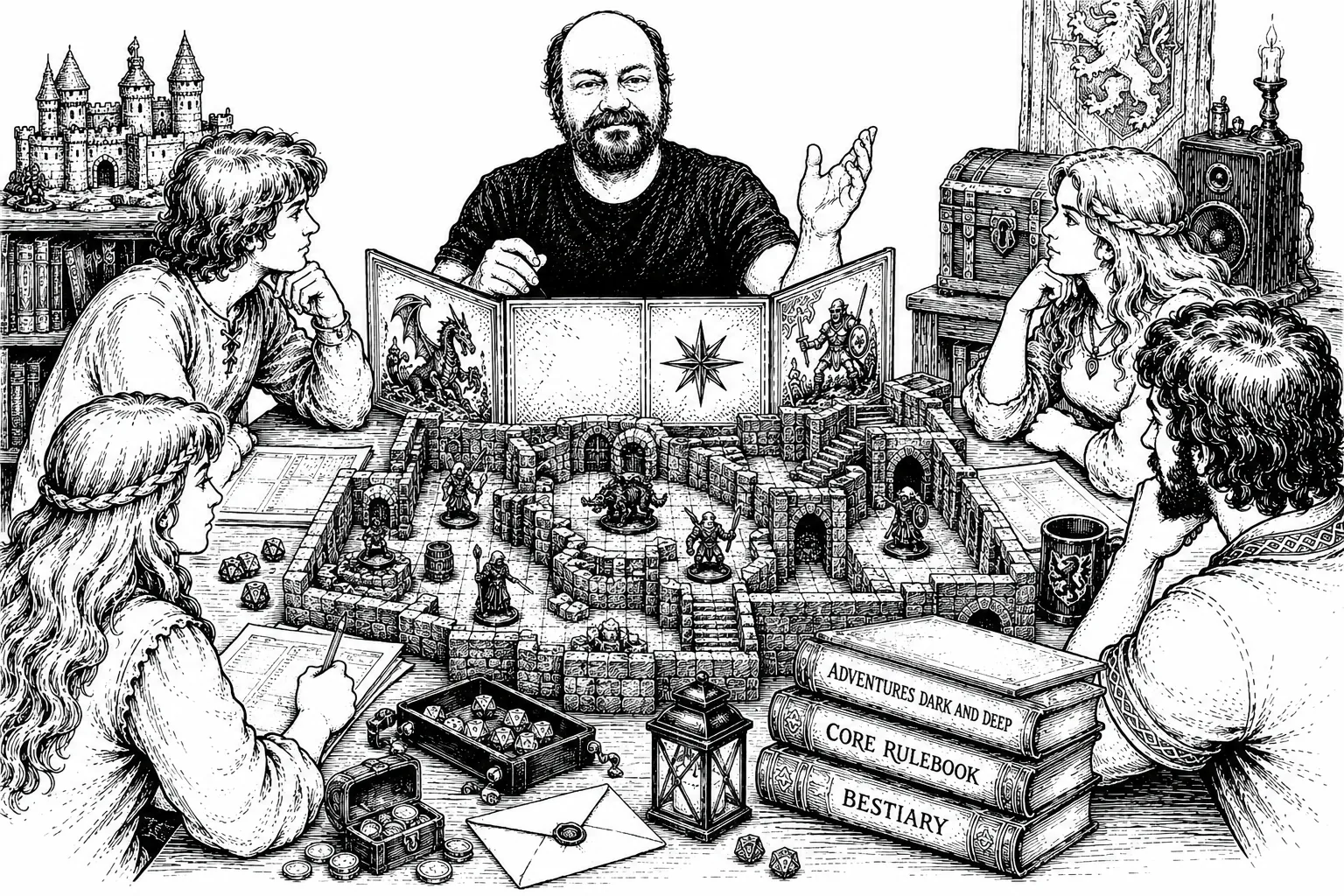
This is where imagination meets craftsmanship.
Some referees enjoy transforming game night into an event. Hand-painted miniatures explore three-dimensional dungeons built from foam or printed terrain. Music changes as the party descends into forgotten catacombs. Letters are sealed with wax, treasure chests contain real coins, and flickering lights suggest the glow of torches deep beneath the earth.
These tables are breathtaking, but they are not required to create memorable adventures.
In fact, most referees who embrace this style build it gradually over many years. A few painted miniatures become a collection. One dungeon tile becomes an entire castle. A simple speaker for background music eventually grows into an immersive experience that reflects the referee’s own creativity as much as the campaign itself.
The greatest danger is forgetting that the terrain exists to support the story rather than replace it. Players rarely remember how many dungeon walls were on the table. They remember the desperate battle fought inside them.
Bringing Greyhawk to Life
Some referees enjoy creating an experience that extends beyond the rulebook. Three-dimensional dungeon walls, painted miniatures, ambient music, handouts, props, dynamic lighting, and digital displays can make the players feel as though they have stepped into another world.
Possible Tools
- Painted miniatures
- Dwarven Forge or printable terrain
- 3D printed scenery
- Dice towers
- Initiative trackers
- Digital maps
- Tablets
- Soundtracks
- Handouts
- Journals
- Letters
- Coins
Advantages
- Incredible visual impact
- Memorable encounters
- Excellent convention experience
- Great for long campaigns
Things to Remember
Preparation time increases dramatically. Terrain takes storage space. Technology occasionally fails. The game should never stop because a prop isn’t ready.
The Best Toolbox
The best Dungeon Master’s toolbox isn’t measured by the number of miniatures on a shelf or the amount of terrain covering the table.
It is measured by the stories the players tell years later.
Many unforgettable Greyhawk campaigns have been run with nothing more than a Core Rulebook, a map of the Flanaess, a notebook full of rumors, and a handful of mismatched dice.
Others have unfolded across beautifully painted dungeons filled with handcrafted scenery and music echoing through the room.
Both are equally valid.
Choose the style that excites you, fits your budget, and allows you to spend less time arranging the table and more time exploring the World of Greyhawk with your friends.
Comments