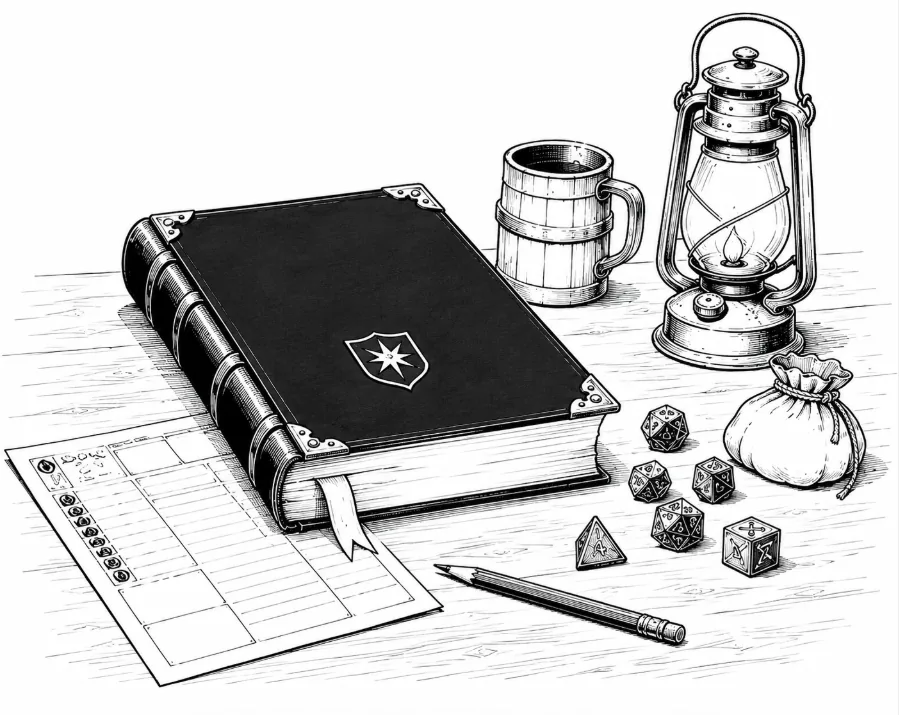
“Every great campaign begins somewhere. The secret is choosing a place small enough that both you and your players can discover it together.”
Opening a new role-playing game is always exciting. It can also be intimidating.
The Adventures Dark & Deep™ Core Rulebook contains more than five hundred pages of rules, character options, spells, equipment, campaign advice, and Game Master resources. At first glance, it may appear to be a book that demands weeks of study before the first adventure can begin.
Fortunately, that isn’t how it was designed to be used.
The Core Rulebook is both a complete rules system and a reference work that will remain beside your dice for the life of the campaign. Some chapters will be consulted every session, while others may not become important until months or even years into the game. Part of becoming a confident referee is learning not to memorize the book, but to become familiar with it.
This article is intended to help you do exactly that.
We’ll take a brief tour of the Core Rulebook, highlight the chapters every new referee should know, point out a few sections that are often overlooked, and offer practical suggestions for preparing your first Adventures Dark & Deep™ campaign. By the time you’re finished, you’ll have a better understanding of what the book contains, where to find the information you need, and how to make it one of the most valuable tools behind your Dungeon Master’s screen.
A Tour of the Core Rulebook
The quickest way to make a five-hundred-page rulebook feel smaller is not to read it cover to cover. It’s to learn how it’s organized.
The book is organized in a logical progression that follows the life of a campaign. It begins by explaining the fundamentals of the game, then moves through character creation, equipment, combat, and magic before expanding into treasure, world building, and advice for the referee. Each chapter builds upon the ones before it, creating a reference that grows with your campaign.
The opening chapters introduce the game and define the six ability scores that shape every character. From there, the sections on races, classes, and secondary skills provide the building blocks for creating adventurers who feel like natural inhabitants of the World of Greyhawk rather than collections of numbers on a character sheet.
The middle of the book contains the rules that will see the most use during play. Equipment lists, combat procedures, and the magic system form the foundation of nearly every session, making these chapters worth becoming familiar with early in your campaign.
Many referees, however, never spend enough time with the final chapters. Those overlooked sections contain some of the most practical advice in the entire Core Rulebook.
The Game Environment explores wilderness travel, movement, weather, visibility, and exploration—the practical details that make the Flanaess feel like a real place rather than a series of disconnected encounters.
Creating the Setting provides ideas for building settlements, adventures, and campaign locations, while Game Master Advice offers decades of practical wisdom on subjects ranging from dungeon design to sandbox campaigns and handling unexpected player decisions.
You don’t need to master every chapter before your first session. Simply knowing what the Core Rulebook contains and where to find it will make you a more confident referee and allow you to spend less time searching for rules and more time describing the adventure unfolding around the table.
Don’t Skip These Chapters
Before your first campaign, become familiar with these often-overlooked chapters:
- Secondary Skills
- The Game Environment
- Creating the Setting
- Game Master Advice
Every referee will spend time reading the chapters on combat, magic, and equipment before the first session. They are essential parts of the game and will quickly become familiar through regular use.
Some of the most useful material in the Core Rulebook, however, is found in chapters that many referees overlook.
Secondary Skills add depth to characters and help answer questions that arise during play. A sailor knows how to handle a boat, a hunter can recognize tracks, and a barrister understands the workings of the law. These skills help define who a character was before becoming an adventurer and provide a framework for resolving uncertain situations without replacing good roleplaying or creative thinking. (Core Rulebook p. 92)
The Game Environment expands the campaign beyond the dungeon entrance. Travel, weather, visibility, movement, and wilderness exploration all contribute to making Greyhawk feel like a living world rather than a collection of isolated adventures. Even a brief review of this chapter will provide ideas that can enrich every expedition. (Core Rulebook p. 429)
Creating the Setting is equally valuable, even if you have no intention of designing your own campaign world. Greyhawk already provides kingdoms, cities, wilderness regions, and centuries of history, but every campaign still needs local details that bring those places to life. Villages need inns and shopkeepers, roads need landmarks, ruins need legends, and taverns need rumors worth investigating. The guidance in this chapter helps referees expand the published setting naturally, creating adventures that feel as though they have always belonged in the Flanaess. Rather than replacing Greyhawk, it provides the tools to make your own corner of Oerth unique while remaining faithful to the world that players already know and love. (Core Rulebook p. 456)
Finally, take time to read Game Master Advice from beginning to end. The discussions on sandbox campaigns, dungeons, urban adventures, clues, metagaming, and problem players represent years of practical experience condensed into a handful of pages. Whether you are sitting behind the screen for the first time or returning after many years away from the hobby, there is wisdom in those pages worth revisiting. (Core Rulebook p. 477)
Many referees discover that these later chapters become more valuable as their campaigns grow. What begins as a simple rules reference gradually becomes a source of inspiration for adventures, locations, and memorable moments around the table.
Make the Book Your Own
Every experienced referee has a Core Rulebook that looks a little different.
Some have worn covers and dog-eared pages. Others are filled with sticky notes, handwritten reminders, and bookmarks marking frequently used tables. A few even contain penciled notes in the margins recording memorable rulings or page references discovered during a campaign.
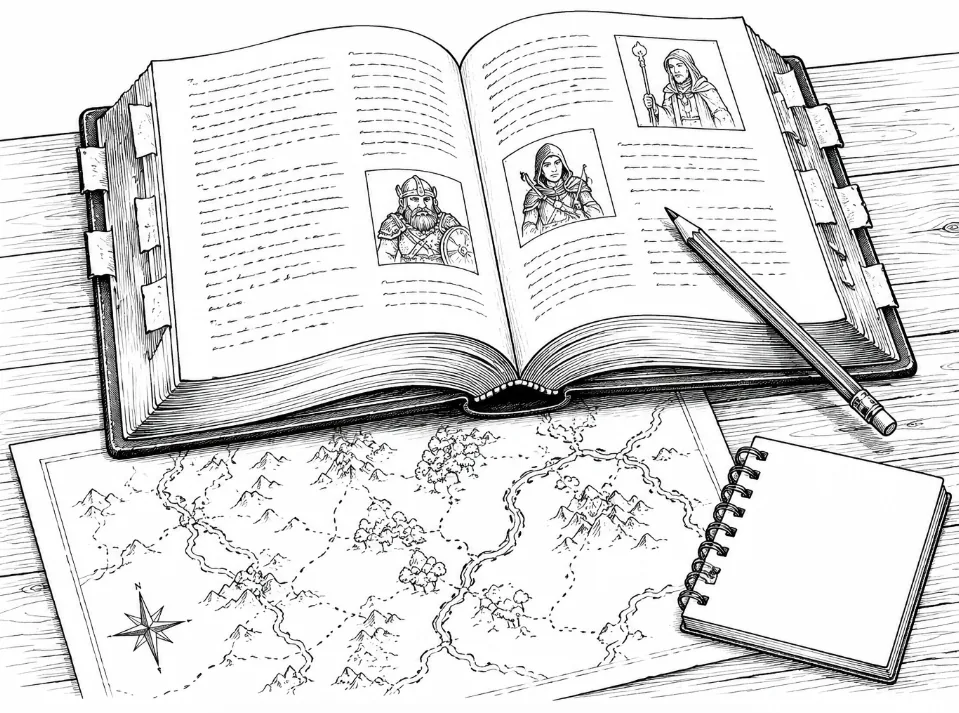
Don’t be afraid to personalize your copy.
Place bookmarks on the chapters you expect to reference often. Mark tables that are used every session, such as equipment, combat, saving throws, and treasure. If an adventure frequently references a particular spell or monster, add a temporary note so it can be found immediately.
Many referees also keep a campaign notebook beside the Core Rulebook. A few pages containing important NPCs, recurring locations, treasure awarded, and unanswered rumors can be more valuable than pages of detailed preparation. As the campaign grows, those notes become a record of the adventures your group created together.
The best Core Rulebooks are rarely pristine. Their pages collect bookmarks, handwritten notes, and worn corners that reflect years of memorable campaigns. The more familiar you become with its organization, the less time you’ll spend searching for rules and the more time you’ll spend describing ancient ruins, negotiating with suspicious merchants, or watching your players devise solutions you never expected.
A well-used rulebook tells the story of every campaign that has been played with it, and those marks often become memories as valuable as the adventures themselves.
Creating the Party
With the groundwork complete, it’s time to gather your adventurers.
One of the first decisions every referee should make is how characters will be generated. Adventures Dark & Deep™ provides several methods for determining ability scores, each producing a slightly different style of campaign. Some embrace the unpredictability of chance, while others give players greater control over the heroes they wish to create. Before any dice are rolled, review the available options in Creating Characters (Core Rulebook, p. 104) and choose a single method for the entire group.

For many groups, character creation becomes part of the fun. Players discover unexpected combinations of ability scores, discuss possible classes, and begin imagining how their characters know one another before the first adventure begins. A fighter from Furyondy, an elven ranger from the Gnarley Forest, a merchant’s son from Dyvers, and a young priest from Verbobonc already have the beginnings of a story simply by sharing the same table.
If your group is eager to begin exploring immediately, consider using the pregenerated characters included in this issue of OERIK. They provide a balanced adventuring party and allow new players to experience Adventures Dark & Deep™ before learning every detail of the character creation process. They also serve as excellent replacement characters should an expedition into the ruins prove more dangerous than expected.
Encourage players to think beyond race, class, and equipment. Secondary skills, languages, social class, and family background all help explain who these characters were before they chose a life of adventure. Those details often become the seeds of future adventures and provide the referee with ready-made allies, rivals, employers, and old acquaintances.
By the end of the evening, the goal is not to create the most powerful party imaginable. It is to create a group of adventurers who belong in the World of Greyhawk and who are ready to step onto the road together, uncertain of what waits beyond the next hill but eager to discover it.
The First Session
There is a natural tendency to believe that the first session has to be perfect.
It doesn’t.
You’ll forget a rule, pause to look up a spell, mispronounce the name of a village, and probably invent an innkeeper because the party decided to walk into the only building you hadn’t prepared. None of those things will diminish the adventure. In fact, many long-running campaigns are built upon those unexpected moments.
Your players will rarely remember whether you consulted the rulebook or checked a wandering monster table. They will remember the suspicious merchant who kept glancing over his shoulder, the hidden staircase beneath the ruined chapel, and the narrow escape from a room that should never have been opened.
Allow yourself the freedom to learn alongside your players.
Every session will make you more comfortable with the Core Rulebook, more familiar with Greyhawk, and more confident behind the screen. The notes you scribble in the margins, the bookmarks that migrate from chapter to chapter, and the campaign journal that slowly fills with names and places are all signs of a game that is growing naturally.
The World of Greyhawk has been inspiring adventures for decades, and Adventures Dark & Deep™ provides a rules system designed to support those stories for years to come. You don’t need to master every chapter before you begin.
You simply need a handful of players, a map of the Flanaess, a few dice, and a willingness to discover what happens when the party takes the first step down an unfamiliar road.
Comments